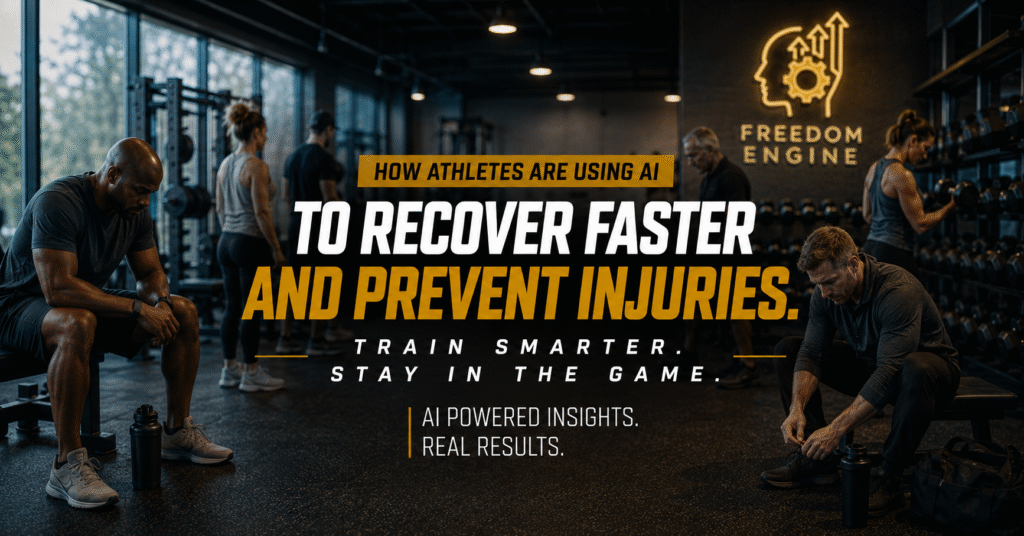
How Athletes Are Using AI to Recover Faster and Prevent Injuries
Most people think AI in fitness is mainly useful for building workouts or tracking calories. One of the biggest shifts happening right now is actually recovery optimization. From professional athletes to personal trainers and everyday gym-goers, AI tools are beginning to help people:
-
detect overtraining earlier
-
improve sleep and recovery habits
-
adjust training intensity automatically
-
reduce burnout and fatigue
-
track mobility and movement quality
-
personalize recovery recommendations daily
This is where AI becomes genuinely useful. Not because it replaces coaches or trainers, but because it helps people notice patterns they would normally miss.
Most Injuries Build Slowly
Most injuries do not happen from one catastrophic moment. They usually come from:
-
accumulated fatigue
-
repetitive stress
-
poor recovery
-
lack of sleep
-
training too hard too often
-
ignoring early warning signs
The difficult part is that athletes are usually highly motivated people. Motivated people often push through signals their body is sending them. That is where AI-assisted recovery tracking becomes useful.
AI Recovery Tools Track Patterns Humans Miss
Modern recovery platforms can analyze:
-
sleep quality
-
heart rate variability
-
resting heart rate
-
training load
-
soreness trends
-
energy levels
-
movement performance
Then they compare those metrics over time to identify when recovery begins dropping. Instead of simply guessing:
“Do I feel tired?”
AI systems can identify trends like:
-
recovery scores declining
-
sleep debt affecting performance
-
elevated stress accumulation
-
signs of potential overtraining
That type of feedback can help athletes avoid weeks or months of setbacks.
Trainers Are Using AI to Personalize Recovery
One of the biggest problems in fitness is generic programming. Two athletes can complete the exact same workout:
-
one adapts well
-
the other becomes injured or burned out
AI helps coaches personalize recovery recommendations based on:
-
age
-
sleep patterns
-
stress levels
-
injury history
-
training frequency
-
wearable device data
Instead of giving every athlete the same recovery protocol, trainers can adjust:
-
workout intensity
-
deload timing
-
cardio volume
-
mobility work
-
recovery days
This creates smarter long term progress instead of constant fatigue cycles.
Wearables and AI Are Growing Fast
Devices like:
-
smart watches
-
recovery bands
-
sleep trackers
-
motion sensors
are now constantly feeding information into AI systems. The AI layer is what transforms raw data into useful recommendations.
Without AI, most people simply stare at numbers.
With AI, the system can explain:
-
what is improving
-
what is declining
-
what habits may be causing problems
-
what adjustments may improve performance
This is one reason recovery technology is growing so rapidly right now.
AI Can Help Reduce Burnout
Burnout is extremely common in:
-
athletes
-
trainers
-
runners
-
bodybuilders
-
endurance sports
-
combat sports
Many people still believe:
“More work always creates better results.”
But recovery is where adaptation actually happens. AI tools can help athletes recognize:
-
chronic fatigue
-
declining readiness
-
poor recovery habits
-
sleep deficits
-
excessive stress accumulation
before it becomes a major performance issue. That can improve:
-
consistency
-
motivation
-
mood
-
long term athletic longevity
Over time, avoiding burnout matters just as much as training intensity.
Mobility and Form Analysis Is Improving
Some AI-powered systems can now analyze:
-
running gait
-
lifting form
-
posture
-
movement symmetry
-
joint positioning
using only a phone camera. This technology is still evolving, but it is becoming increasingly useful for:
-
remote coaching
-
at home training
-
rehabilitation exercises
-
beginner athletes learning technique
Over time, this could dramatically improve access to quality coaching and movement analysis.
AI Will Likely Become a Second Coach
The future of fitness probably is not:
“AI replaces trainers.”
A more realistic outcome is:
“AI becomes an assistant layer.”
Human coaches still provide:
-
experience
-
motivation
-
accountability
-
emotional intelligence
-
real world judgment
AI helps handle:
-
data analysis
-
pattern detection
-
recovery tracking
-
schedule optimization
-
performance monitoring
That combination is extremely powerful.
What Real AI Fitness Stacks Look Like
Most articles about AI fitness stay vague. They talk about “optimizing recovery” without explaining what tools people are actually using. The reality is that the stack matters more than any single app. A strong recovery system usually combines:
-
wearable tracking
-
recovery analysis
-
workout adaptation
-
nutrition tracking
-
sleep optimization
-
long term trend analysis
The goal is simple, reduce guesswork. Instead of thinking:
“I think I am recovering well.”
Athletes can start identifying actual patterns like:
-
poor sleep reducing performance
-
recovery crashes
-
overtraining trends
-
elevated stress
-
hydration issues
-
inconsistent workout intensity
The AI layer helps connect the dots.
Popular AI Recovery Stacks
Best Overall Recovery Stack
Common tools:
-
WHOOP
-
Oura
-
Athlytic
-
Fitbod
-
MyFitnessPal
These systems can track:
-
heart rate variability
-
sleep quality
-
training strain
-
recovery readiness
-
workout fatigue
-
calorie and protein intake
For example, if someone wakes up with poor recovery metrics and elevated fatigue markers, the AI may recommend:
-
lower training intensity
-
reduced volume
-
mobility work
-
additional recovery focus
That small adjustment can help prevent burnout and unnecessary fatigue accumulation.
Best Budget Recovery Stack
A strong lower cost setup might include:
-
Apple Watch
-
Athlytic
-
Hevy
-
Cronometer
This setup works well for:
-
beginners
-
intermediate lifters
-
consistency focused users
-
people avoiding expensive wearable ecosystems
The biggest advantage is simplicity and low friction.
Best Endurance Athlete Stack
Common endurance focused tools include:
-
Garmin
-
Strava
-
TrainingPeaks
-
Oura
These systems are especially popular among:
-
runners
-
cyclists
-
triathletes
-
hybrid athletes
Garmin in particular remains one of the strongest ecosystems for tracking endurance performance and recovery trends.
The Most Important Insight
Most people think the best app creates the best results. That is typically not true. The biggest transformations usually come from:
-
sleeping consistently
-
tracking protein intake
-
progressive overload
-
avoiding overtraining
-
staying consistent long term
AI mainly helps people:
-
stay organized
-
notice patterns faster
-
reduce mental fatigue
-
make better decisions consistently
That is where the real value exists.
Final Thoughts
The best AI fitness system is the one someone actually uses consistently. A simple stack like:
-
Apple Watch
-
Athlytic
-
MyFitnessPal
used consistently for years will usually outperform an expensive biohacking setup abandoned after a few weeks.
The fitness industry is slowly moving away from:
“Train harder.”
Toward something smarter:
“Recover smarter.”
Athletes who balance training, recovery, sleep, stress management, and intelligent adaptation will usually outperform athletes who simply grind endlessly. AI is becoming one of the tools helping people find that balance. Over the next several years, recovery focused AI will likely become as common as fitness apps and smart watches are today.