
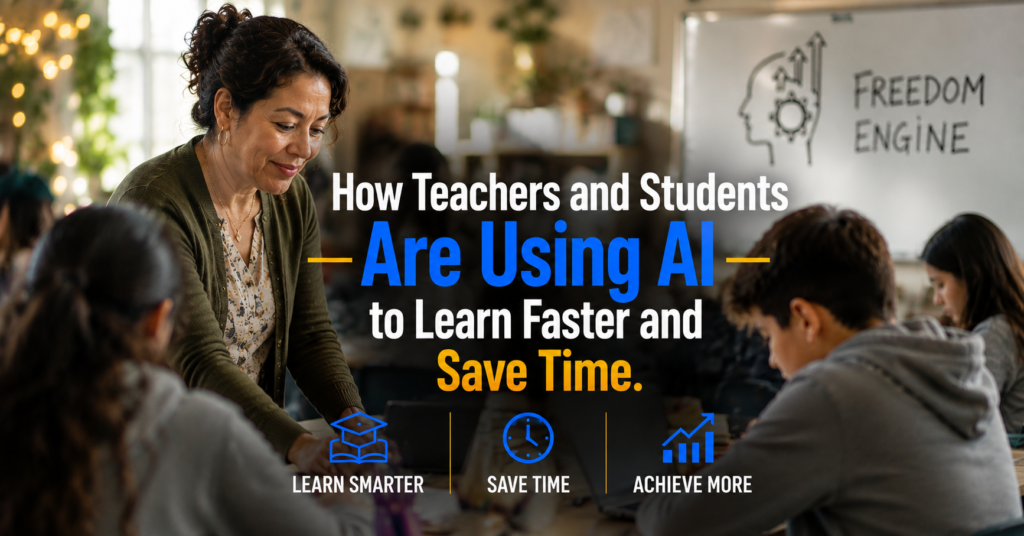
How Teachers and Students Are Using AI to Learn Faster and Save Time
Education has always required time. Teachers spend hours creating lesson plans, grading assignments, answering questions, and preparing materials. Students spend hours taking notes, studying for exams, completing homework, and trying to understand difficult concepts. The challenge is not a lack of information. The challenge is managing information efficiently. This is one of the reasons AI is becoming a valuable tool in education. When used correctly, AI can help teachers reduce repetitive work and help students learn more effectively.
The Real Problem In Education
Teachers and students are both facing the same challenge. There is simply too much information and not enough time. Teachers often spend time:
• creating lesson plans
• building quizzes
• writing assignments
• answering repetitive questions
• organizing classroom materials
• grading student work
Students often spend time:
• reviewing notes
• creating study guides
• preparing for tests
• researching topics
• organizing assignments
• trying to understand difficult concepts
Most people are not struggling because they are unwilling to learn. They are struggling because the process can be overwhelming.
Why Learning Often Feels Difficult
Many students believe they need more information. In reality, they often need better organization. A textbook chapter may contain dozens of pages of material. A student might spend hours trying to identify what matters most. Teachers face a similar problem. They may understand the subject perfectly but still spend hours turning that knowledge into lessons, quizzes, and classroom activities. This is where AI can help.
How AI Helps Teachers Save Time
The biggest advantage for teachers is reducing repetitive preparation work.
AI can help:
• create lesson outlines
• generate quiz questions
• build classroom activities
• simplify complex topics
• create discussion prompts
• draft emails to parents
Instead of starting from a blank page, teachers can start with a draft and customize it for their classroom.
This often saves hours every week.
A Real Teacher Workflow
Imagine a teacher is preparing a lesson about the solar system. Instead of creating everything manually, they could:
Step 1
Ask ChatGPT:
“Create a 45-minute middle school lesson plan about the solar system.”
Step 2
Review the lesson and make adjustments.
Step 3
Ask:
“Create 10 multiple choice quiz questions based on this lesson.”
Step 4
Ask:
“Create a classroom discussion activity about space exploration.”
Step 5
Combine everything into a lesson packet.
Result:
• lesson plan completed faster
• quiz created
• discussion activity created
• less preparation time
The teacher still guides the classroom. AI simply reduces the administrative work.
How AI Helps Students Learn Faster
Students often spend more time organizing information than actually learning it.
AI can help:
• summarize notes
• explain difficult concepts
• create flashcards
• build study guides
• generate practice quizzes
• identify weak areas
Used correctly, AI becomes a study assistant rather than a shortcut.
A Real Student Workflow
Imagine a student preparing for a history exam. Instead of rereading an entire chapter several times, they could:
Step 1
Paste class notes into ChatGPT.
Step 2
Ask:
“Summarize these notes into a study guide.”
Step 3
Ask:
“Create 20 flashcards from this information.”
Step 4
Ask:
“Create a practice quiz using these notes.”
Step 5
Review incorrect answers and focus on weak areas.
Result:
• organized study materials
• practice questions
• faster review process
• more efficient learning
The student still does the work.
AI simply helps organize the information.
The Freedom Engine Education Stack
A simple education stack might include:
ChatGPT
For explanations, study guides, lesson plans, quizzes, and brainstorming.
Google Docs
For organizing notes and assignments.
Canva
For presentations, classroom visuals, and educational materials.
Google Classroom
For managing assignments and communication.
The goal is not collecting tools. The goal is creating a system that supports learning.
Common Mistakes People Make With AI In Education
AI works best when it supports learning, not replaces it.
Common mistakes include:
• copying answers without understanding them
• relying entirely on AI-generated work
• skipping fact checking
• using AI instead of studying
• focusing on shortcuts instead of comprehension
The most successful students and teachers use AI as an assistant, not a replacement.
The Most Important Insight
AI is not making education easier because it knows more than teachers or students. It is making education easier because it helps organize information. Teachers can spend more time teaching. Students can spend more time learning. Less time is wasted on repetitive tasks.
Final Thoughts
Education will always require effort. There is no tool that replaces curiosity, practice, or critical thinking. But AI can help remove friction from the learning process. When used correctly, AI allows teachers to focus on teaching and students to focus on understanding. The result is not less learning. The result is more effective learning in less time.